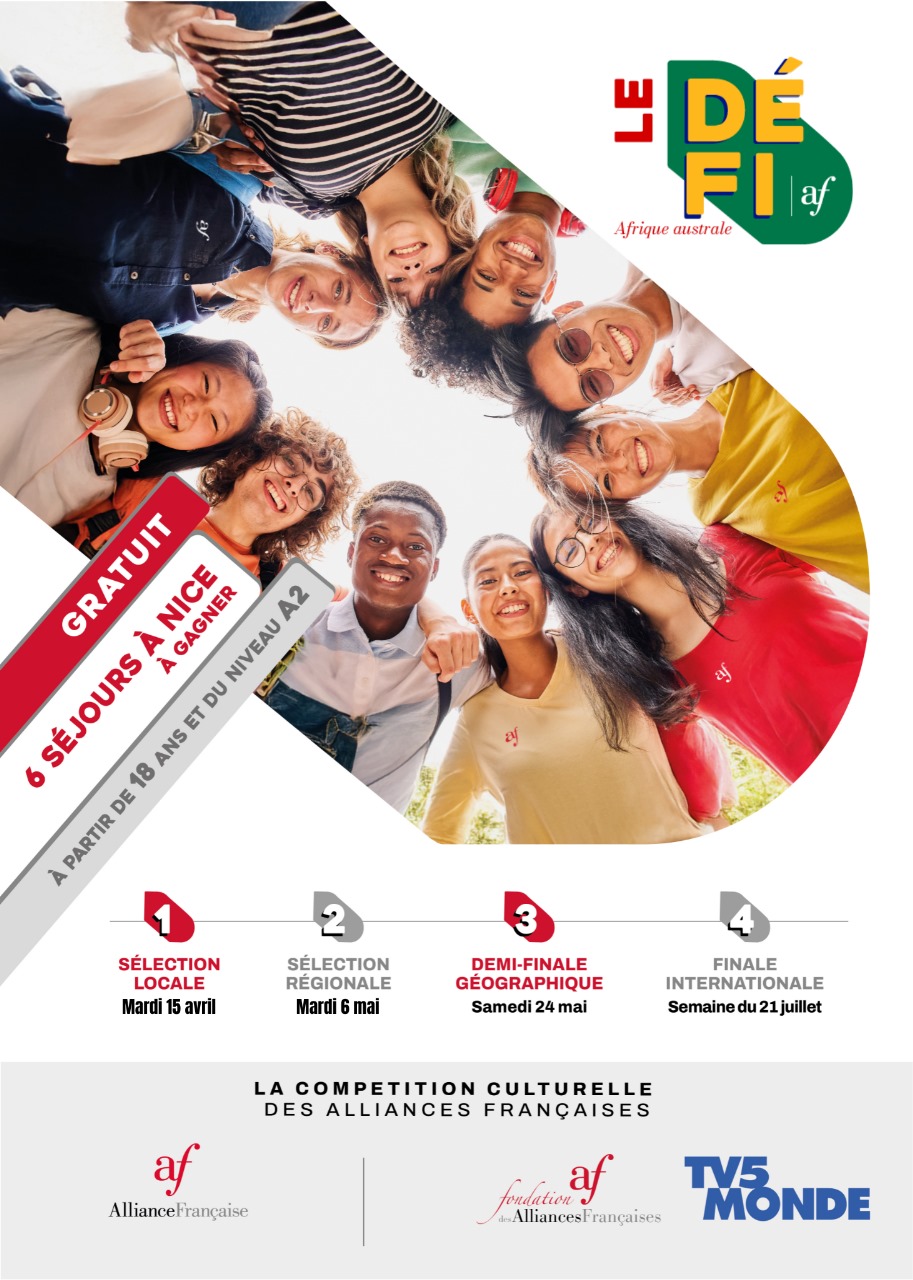
On 11 March, the Alliance Française de Pretoria hosted the semi-finals of the Épelle-moi spelling competition, bringing together young participants, teachers and organisers to celebrate the French language during the Month of Francophonie. The event formed part of a much broader initiative aimed at promoting literacy, multilingualism and confidence among young people across Southern Africa.
Épelle-moi is the French-language equivalent of the well-known spelling bee competitions that have long been popular in the English-speaking world. Yet, as Muriel Huet, Director of Épelle-moi South Africa, explains, the programme is about much more than simply spelling words correctly.
« Alors Épelle-moi c’est un concours d’épellation, l’équivalent en anglais c’est le spelling bee », she says. « Mais ce n’est pas que un concours d’épellation, c’est beaucoup plus. »

The initiative works with young people throughout the year, organising competitions as well as reading sessions, writing workshops and academic support programmes. These activities aim to strengthen language skills while also creating a supportive environment for learners from a wide range of backgrounds.
« Épelle-moi Afrique du Sud, on travaille toute l’année avec beaucoup de jeunes, plusieurs catégories. On fait des compétitions d’épellation mais on fait aussi des ateliers d’écriture, des ateliers de lecture, de l’aide aux devoirs… On a énormément d’activités. »
From London classrooms to South Africa
The idea for Épelle-moi in South Africa emerged from Huet’s own experience as a teacher in the United Kingdom. While teaching in London, she participated in a French spelling bee with her students and immediately saw its impact.
« Je participais au French Spelling Bee quand j’étais enseignante à Londres. En tant que prof, j’ai adoré cette expérience et j’ai vraiment trouvé que ça donnait beaucoup de motivation à mes élèves. »
The competition not only encouraged students to improve their spelling but also helped them with pronunciation and confidence when speaking the language.
When Huet later moved to South Africa, a key encounter helped transform the idea into a concrete project. She met the director of the A Better Africa Foundation, an organisation that has been running English spelling bee competitions and literacy programmes for more than 15 years.
« Quand je suis arrivée en Afrique du Sud, j’ai eu la chance de rencontrer le directeur de A Better Africa Foundation… Et donc nous est venue l’idée de commencer ce concept en Afrique du Sud mais en français. »
Since then, the programme has steadily expanded.
Rapid growth since 2018
What began as a relatively small initiative has grown into a major youth programme engaging students across several countries in the region.
« On est très fiers parce qu’on a commencé avec très peu d’étudiants en 2018, vraiment une petite cinquantaine », Huet explains. « Maintenant on en a à peu près 1000 par an, en comprenant toutes nos activités. »
Participants come from a variety of countries including South Africa, Lesotho and Malawi. The programme also works closely with francophone diaspora communities living in South Africa.
Many of these young people arrive in the country during their schooling and may face challenges integrating into the education system.
« Souvent ce sont des jeunes qui arrivent un peu en cours de route de leur scolarité, qui ne parlent pas très bien anglais, donc sont un peu en échec scolaire », Huet says. « Donc on essaye de les aider à leurs devoirs, de leur redonner confiance en eux. »
Beyond academic support, the programme also helps young people reconnect with their linguistic and cultural identities.
« Ils perdent très vite accès à leur langue qu’ils ont depuis petit… souvent le français, le lingala, etc. Donc on leur donne accès à tout ça. »
Promoting an inclusive Francophonie
One of the central values of Épelle-moi is its emphasis on inclusivity and the diversity of the Francophone world. The initiative intentionally brings together young people from different linguistic, cultural and national backgrounds.
« On a vraiment une approche très plurielle de la francophonie, très inclusive », explains Huet. « On incorpore vraiment toutes les langues. »
The programme also seeks to foster understanding between communities. In some areas where participants live, xenophobia remains a challenge. By bringing young people together through language and shared activities, Épelle-moi aims to create opportunities for dialogue and mutual respect.
« On travaille pas qu’avec eux, on travaille aussi avec des Sud-Africains… pour pouvoir justement combattre cette xénophobie et montrer aux Sud-Africains que c’est les mêmes jeunes. »
The Month of Francophonie in March provides an especially meaningful moment to create these encounters.
« De temps en temps, surtout au mois de mars, lors du mois de la francophonie, on fait rencontrer tous ces jeunes… pour célébrer la langue française. »
A competition open to many levels
The participants in Épelle-moi range widely in age and linguistic ability. Some are beginners learning French at school, while others are native speakers who grew up using the language at home.
« Ça va de petits de 8 ans à 18 ans », Huet explains. « Il y en a qui apprennent le français, ils viennent juste de commencer, certains sont francophones. »
Competitions are therefore organised in several categories to ensure that participants compete at an appropriate level.

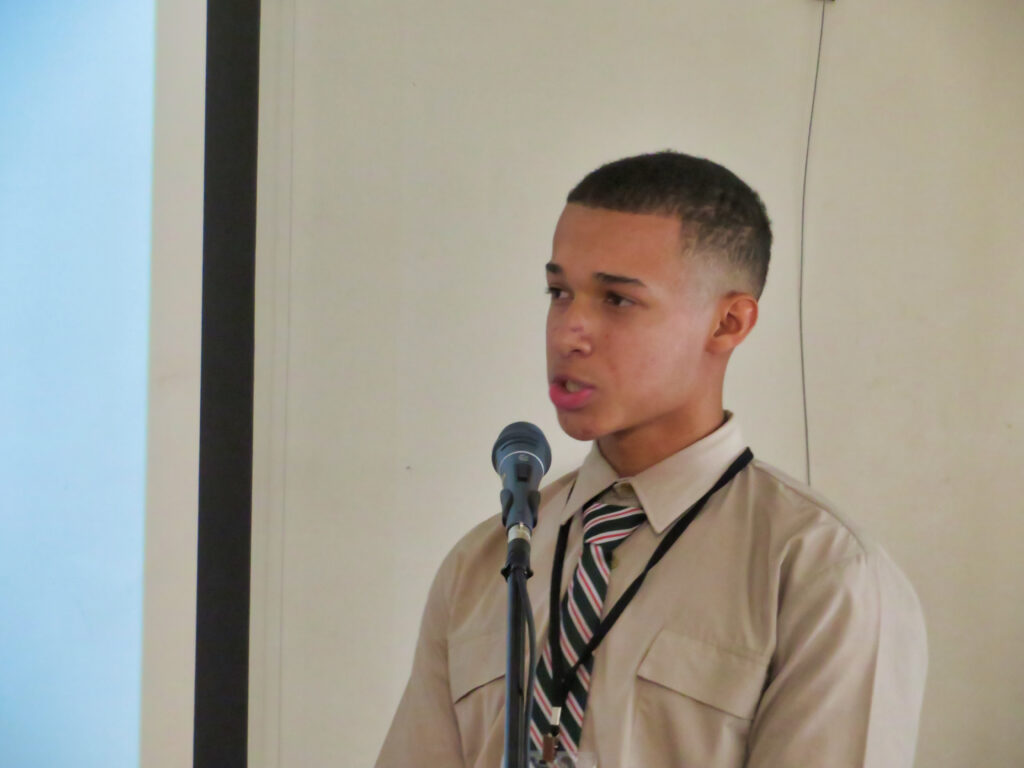


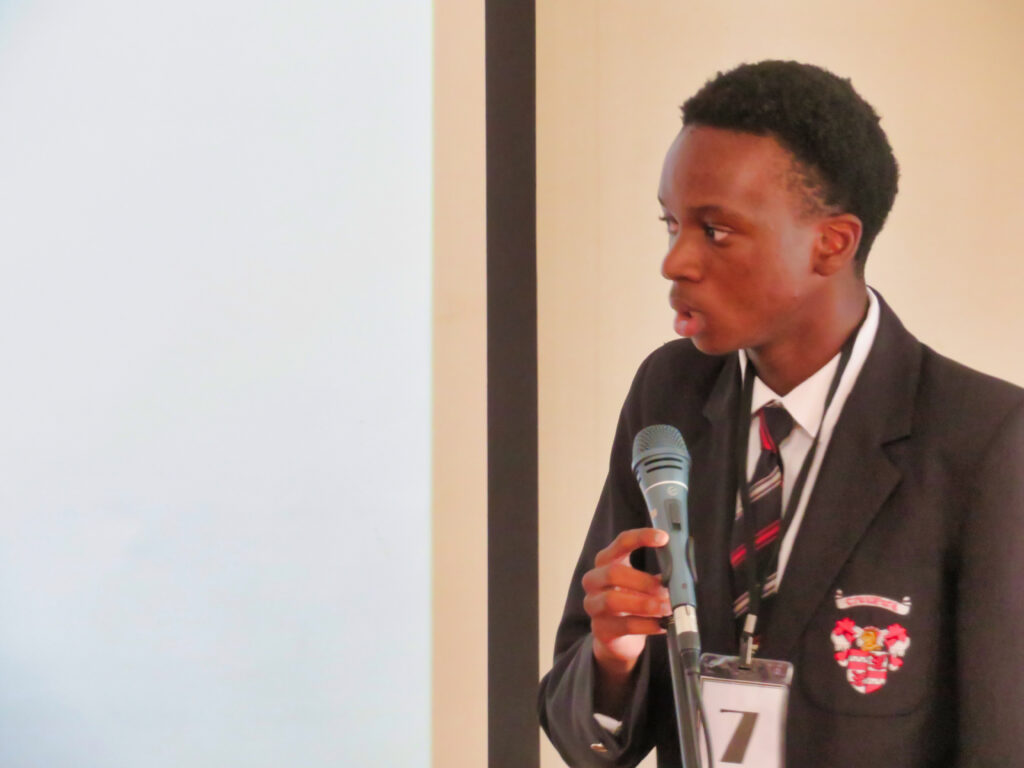

Despite the differences in ability, the aim remains the same: to encourage young people to engage with the French language and to celebrate the diversity of the Francophone community.
« On touche beaucoup de jeunes, quel que soit leur niveau de français, leur milieu, leur nationalité. »
More than spelling words
While spelling remains at the centre of the competition, the format includes a variety of challenges designed to develop broader language skills.
Participants may take part in timed rounds where they must spell as many words as possible in a minute, as well as more traditional spelling challenges involving unfamiliar words.
« On travaille sur le vocabulaire et les mots, la prononciation », says Huet. « On a des étapes de rapidité… et on a aussi des mots mystères. »
Many of the words come from lists that participants study in advance, often through workshops or online quizzes.
Another important component of the programme encourages reading and cultural exploration.
« On a aussi une catégorie… avec plusieurs thèmes pour vraiment les inciter à lire, à s’intéresser à la langue française. »
Geography and cultural knowledge are also incorporated, with participants sometimes asked to spell the names of francophone cities or countries.
In line with the programme’s inclusive philosophy, words from African languages are also occasionally included.
« Ce qu’on essaye d’intégrer de plus en plus, ce sont des mots dans d’autres langues africaines, comme le Lingala, le Wolof… pour célébrer cette francophonie plurielle. »
Language linked to global themes
Each year the competition also introduces themes that encourage participants to engage with broader social topics.
For the 2026 semi-finals hosted in Pretoria, the theme for one of the categories focused on global citizenship.

« Le thème de cette année… c’est les citoyens du monde », Huet explains.
This means that participants may encounter vocabulary linked to topics such as the environment, citizenship or global responsibility.
« Le vocabulaire n’est pas si facile que ça, parce qu’ils doivent parler de choses comme l’environnement, la citoyenneté. »
These themes also provide opportunities for discussions, debates and creative writing exercises during workshops.
« On aime beaucoup travailler sur la langue… faire des débats, lire des articles, faire de l’écriture créative. »
Building confidence and communication skills
For Huet, one of the most valuable aspects of Épelle-moi is the way it helps young people build confidence and communication skills.
Competitions take place in front of audiences and juries, requiring participants to speak clearly and present themselves publicly.
« Les compétitions se passent devant des jurys, devant d’autres jeunes, d’autres adultes », she explains.
Public speaking can be intimidating, particularly for teenagers.
« Présenter en public, ce n’est pas toujours évident à 15–16 ans », Huet says.
Through regular workshops and competitions, students gradually develop the confidence to express themselves.
« Je pense que ça leur donne une grande confiance en eux. »
Participants also learn important lessons about perseverance and resilience.
« Il y a le côté compétition… la pression aussi de gagner. Et puis aussi d’apprendre à perdre parce que tout le monde ne peut pas gagner. »
Looking to the future
The competition offers trophies, medals and prizes for winners, supported by the French Embassy in South Africa, Lesotho and Malawi, and several partners and sponsors. However, Huet says the organisation hopes to expand its network of supporters to help grow the programme further.
« Nous sommes toujours à la recherche de nouveaux sponsors pour des nouveaux prix. »
Looking ahead, Épelle-moi aims to reach even more young people across the region.
While many participants outside Gauteng currently take part online, the organisation hopes to organise more in-person activities in different parts of the country.
« On voudrait toucher encore plus de jeunes », Huet explains. « On voudrait pouvoir voyager autre qu’à Johannesburg ou Pretoria. »
The initiative is also part of a wider international network, collaborating with similar programmes in several countries.
« On a aussi une association Épelle-moi international… avec le Togo, Mali, Bénin, Cameroun, Côte d’Ivoire, Cap Vert, Canada. »
Through regular meetings and online competitions, organisers share ideas and build connections between young participants across continents.
Ultimately, Huet hopes that these initiatives could one day lead to an even larger stage.
« Notre grand rêve… ce serait d’un jour participer aux Jeux de la Francophonie. »
For the young participants gathered at the Alliance Française de Pretoria, however, the immediate goal remains simple: mastering the next word, letter by letter, while discovering the richness of the French language and the diverse cultures that shape it.
ARTICLES
- https://lepetitjournal.com/johannesburg/a-voir-a-faire/johannesburg-bonjour-brixton-celebrer-langues-et-diversite-425828
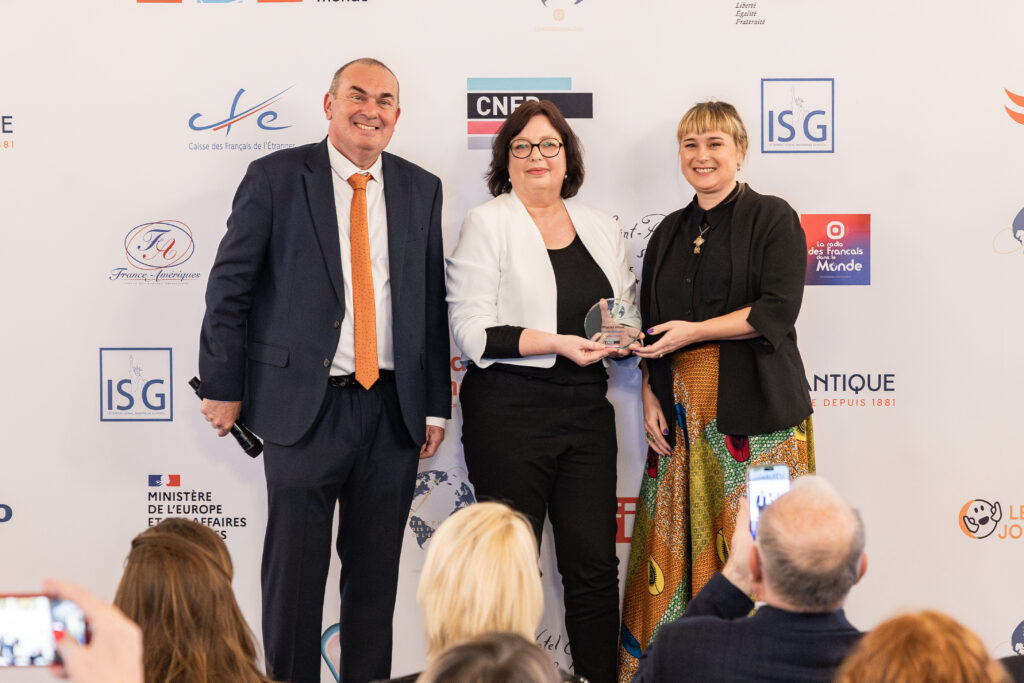
- https://www.cned.fr/l-actualite-de-la-formation/le-cned-de-a-a-z/trophees-des-francais-de-letranger-2026-muriel-huet-laureate-du-trophee-education
- https://lepetitjournal.com/trophees/club-laureats/six-profils-exceptionnels-14e-edition-trophees-francais-etranger-436144